Tuesday, April 26, 2011

I Love to Tell the Story

The old gospel song "I Love to Tell the Story" touches me in so many ways.  Foremost is the message:  "...of Jesus and His Glory - of Jesus and His love."  And, all writers are story tellers of sorts.  Even those that offer instruction are drawing upon their own lives and weaving it through the selection of topics. 

I'll use plants from my garden as an example of bringing your own particular story to your garden.  Be it Biblical, colors, family or other interests, acres may be filled with your theme varieties. 

Sprinkled throughout your garden, they are simply a reminder to yourself of your passions.  For those who wish to expand a Biblical themed garden, here are some beauties:

I planted "Amazing Grace" in my family flower garden bed (called the family plot) for my granddaughter, Grace.  It is a beautiful 6 inch ruffled bright yellow daylily.  It blooms in June-July and is fragrant.  Awards:  Award of Merit, Honorable Menton and Junior Citation. 

"Spiritual Corridor" daylily is a gorgeous lavender pink with a prominent creamy yellow eye and a matching picotee edge.  The creamy watermark that blends into the eye is another feature that makes this early bloomer a standout.  

"Timeless Grace" is another of the many featuring Grace in it's title.  The bloom is 5 1/2 inches and is considered an extra early season bloomer and then it may re bloom.  The wide petals of pale rose pink have heavily ruffled edges and a yellow throat.  The cream midribs may be pronounced or mostly hidden. 


"Jacob's Ladder" is a sweet perennial featured in my article "J Is For Jacob's Ladder"  numbered 303.  

The white "Lily of the Valley" bell-like flowers have a fragrence worthy of the many perfumes which use it's scent.  Considered a pest in some areas of the country because it spreads - in this neck of the woods, it's a treasure.  Loving shade, it nestles under bushes and perennials blooming in early spring and then the leaves sit patiently for the rest of the summer.

A little stop by a favorite flower during your morning coffee or your evening glass of tea may bring sweet memories of why you have chosen a certain garden theme.

"God Almighty first planted a Garden; and, indeed, it is the purest of human pleasures; it is the greatest refreshment to the spirits of man..."  Francis Bacon 
  

Thursday, April 21, 2011

Dishing On Dirt


Exactly what is right and wrong for garden soil (soil not dirt is the correct word according to the “horticulture crowd”)? You may get as many different answers as there are questions and many are from experts.

Granted, I take a casual attitude and tend to use as few chemicals as will suffice. I understand that location, soil composition and gardener involvement make a difference.

My casual attitude indicates I love fresh produce straight from my garden but do not in any way enjoy the tasks involved in vegetable gardening. Call it lazy or call it selective – I’ve come to accept this about myself. I realized I needed the simplest way to garden and still get abundant healthy produce.

For those who love-LOVE-L O V E the processing of gardening – let this article go without reading. For those of you who are process averting – come along with me today.

Seldom does town or county acreages have perfect soil. My garden area is former fields which were compacted, nutrient depleted, rocky and drained poorly. A town garden may be backfill.

Over the years my main garden soil enhancement has been manure. Dried (or aged) manure tilled into the garden will improve nutrients, aid de compaction, and enhance drainage. It is the single best additive I have ever used.

I also recycle/compost various non animal products such as coffee grounds & filters, fruit & vegetable scraps, newspaper & other biodegradable papers.

During this process, we have raised the soil level to enhance drainage. Raised beds are again gaining in popularity and I recommend this if you are starting from scratch. Besides the benefits for the soil, it enables gardening without bending over. There are directions for these if you are interested.

We do not till the garden except on the years when we add manure. There are several reasons: doesn’t disturb the beneficial insect activity, doesn’t eliminate the mulch already in place, doesn’t compact and takes less labor.

For the most part, I use newspaper as my garden mulch. It isn’t pretty but it recycles, it decomposes and it works. I use shredded paper, torn paper or flat newsprint in layers. Paper will absorb and hold moisture and help keep weeds from germinating. It allows plant specific watering without splashing mud on the plant or wasting water on bare ground. Paper can’t be applied on windy days, should be wet down immediately and may need some clods of soil to initially hold it in place.

If you plant seeds, apply paper between the rows and once the plants are thinned and larger, apply around the stems.

I’ve found paper mulch inhibits harmful insects better than most insecticides and keeps produce off the ground to prevent rotting. A negative of any mulch is it prevents beneficial earth dwelling bees and wasps from having access to expanses of nutrient rich soil.

Read my blog for other hints for reducing garden work. And to all the gardeners who love the process – I admire and enjoy your perfectly manicured spaces. To all the farmers starting the spring planting season – be safe and thanks again for feeding the world.

“Right letting alone and right meddling are the beginning and the ending of good gardening . . .”
E. A. Bowles in “My Garden in Spring”, 1914.

This is the start of paper mulching around my tomato plants.  This was a no-till year and grass is beginning to take hold - always a factor when using manure.  It will be smothered when it lays under a thick mulch all summer.
 
"New BFF" - blog article #135 - has more on Manure for gardens.   

Tuesday, April 19, 2011

N is for Nicotiana

Nicotiana Solanaceae (flowering ornamental tobacco) is a beautiful and fragrant annual in this area.  Some compare the fragrance to jasmine.  Planted from sets or seeds, they grow to 8 inches to 5 feet tall and most require full sun and moist well-drained fertile soil.  In other warmer areas, there is a perennial Nicotiana.

The annual bloom time is from summer to frost.  When other flowers are wilting from the heat and humidity of late summer, Nicotiana flourishes.  For the longest bloom time, it is suggested the seeds be started indoors and planted outside after the danger of frost and the soil has warmed.  OR, buy sets from your local nursery or garden center.  They "may" self seed or collect the seeds to start your own next year.      

The flowers are trumpet shaped ending in a star and most hang down a bit.  They come in colors of white, pink, rose, red, lavender, lime green, dusty shades, purples, and a blue tint.  The more white, the more fragrance.   

Aside from the intoxicating fragrance we humans smell from Nicotiana, hummingbirds, butterflies and "spectacular" moths find them irresistible.  They are seldom bothered by deer, disease or pests.

Even though we may think of the Nicotiana as the beautiful and fragrant garden annual (it is), it is still tobacco.  There is rich history and controversy weaved about Nicotiana.

Nicotiana is called the most well know plant of the Americas because of the ritualistic use by every Native American tribe.  They consider it the unifying factor between humans and the spiritual powers.  There are found examples over 10,000 years old.  

The flowers of the original flowering tobacco (Nicotiana alata) are very fragrant and open at night. During the day, the night flowering varieties might look spindly and the flowers not as showy. Some more recent varieties open all day, but are not always so fragrant. If the fragrance is your main attraction, your better bet is with the white, night-flowering varieties.


Varieties include:  N. alata grandiflora, N. affinis, N. tabacum, N. rustica, N. acuminata, N. glauca, N. Sanderae, N. Bigelovii (Indian Tobacco), N. Suaveolens, N. aromatica, N. sylvestris (old fashioned), N. longiflora, N. wigandioides, N. obtusifolia (Desert Tobacco) and N. noctiflora.  There are new varieties being developed.  N. tabacum is typically just grown for the commercial use of it's leaves for smoking products.  Most are native to the Americas - a few native in the Pacific Ocean islands.  China has become a major supplier of seeds for those who farm the commercial smoking variety. 


A mild fertilizing each blooming month and deadheading the flowers will keep the decorative Nicotiana blooming heavily all summer. 

Nicotiana looks beautiful in a natural or country garden.  They look stunning when planted in masses.  Since the bottom of the plant is usually a single stem, they may be tucked into existing perennial beds without disrupting established roots.  When the tops of the taller varieties get full sized, they tend to lean if not supported.  

If planting the very fragrant variety, plant where you will smell - near porches, paths, and open windows.  These areas will also provide the best view for watching hummingbirds, butterflies and moths.

The white varieties glow in an all-white night or shade garden.     


“A beautiful blossom
is a fleeting thing
It stays for a moment
and then takes wing.”
Albert Richards “Floral Radiographs: The Secret Garden”


Poisonous – All parts of the plants are highly poisonous and contain the toxic pyridine alkaloids nicotine and anabasine.  Smoking tobacco N. tabacum and N. Bigelovii are considered a narcotic.


Saturday, April 16, 2011

Ribbit and Croak

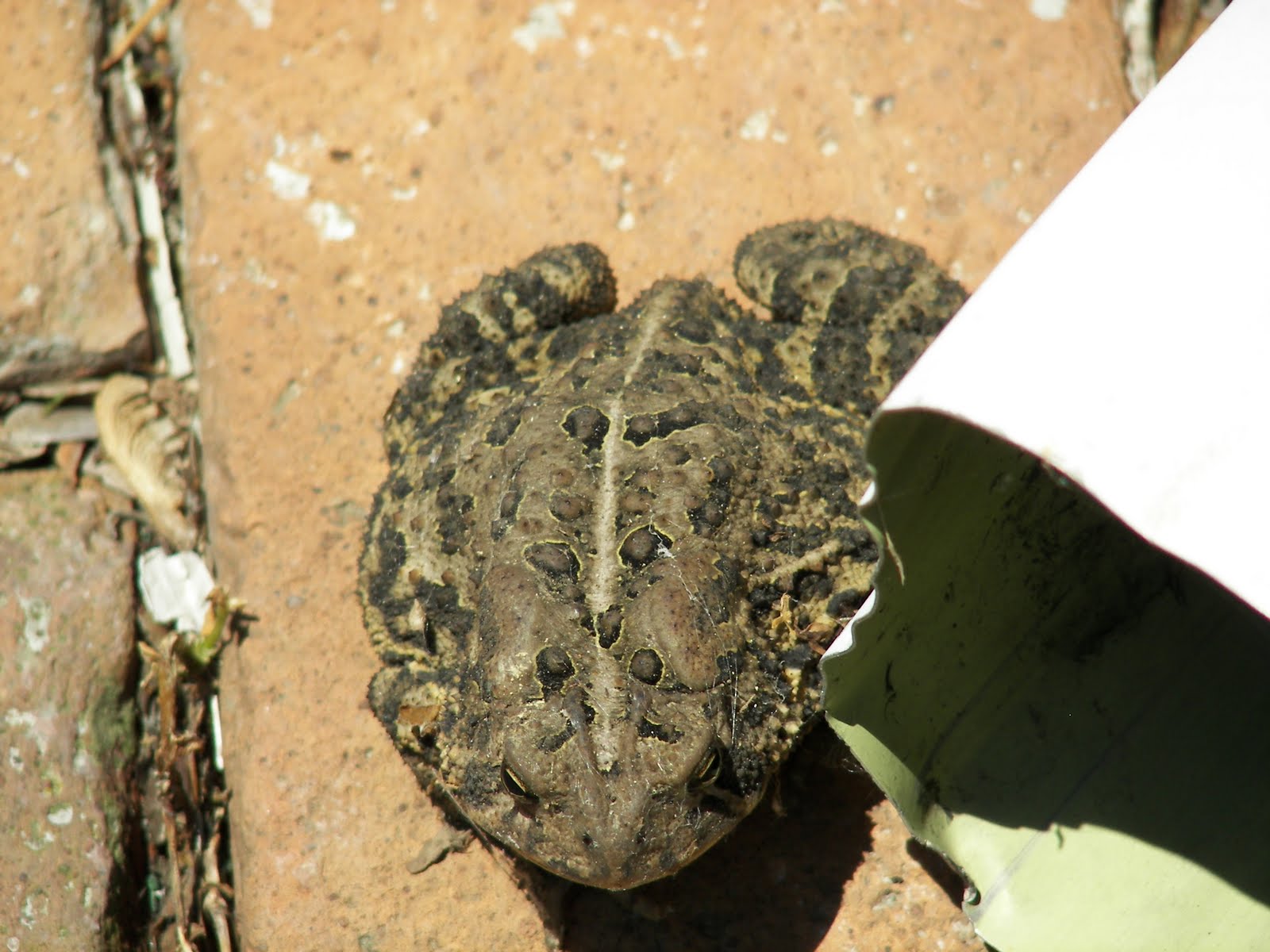
We have an abundance of toads around our house and in the back woods.  A tough life for these welcome little amphibians because they are at the bottom of the food chain in many instances.  Hawks, owls, snakes, and even larger mammals will eat them given a chance.  This chubby little "American Toad" is holding still in hopes I won't notice him.  Another hazard for toads and frogs is the lawn mower.  When you see movement in the grass ahead of your mower, slow down and let them hop to safety. 


Toads and frogs are interesting to watch and provide nature a great insect pest removal system.  They can eat up to 1,000 insects a day.  That's better efficiency than man-made devices.  This toad is sunning to help get limbered up for the day.  Providing a place for the toads to have a daily water soak is easy.  Bury a shallow dish (old dinner plate, plant pot saucer, wash basin)  almost to the outside rim and fill with water.  Keep it filled every day the weather isn't freezing.  A rock or two will give them a place to sun.  It's best if these places are in a semi protected place so as not to attract frog eating birds.   
Toads and frogs are VERY sensitive to pesticides - which is absorbed through their skin.  Again, if you want natures' predictors to do your dirty work you must not use chemicals that might harm them.  This little guy (or gal) is making good use of his coloring design to stay hidden from predators.  Providing fallen logs, leaf debris and rocks is a way to welcome them.  A perfectly manicured, chemically treated yard will not be a good place for amphibians.

Toads and frogs need an insect population, water and moist areas, pesticide free foliage, and hiding places.  In the winter, they will burrow into the earth and hibernate.  It's fun to provide shelter homes for toads and frogs although they seem to do fine on their own.  Providing shelters is a great kids' project.  Teach children to watch them instead of handling them.  Most have a rather unpleasant sticky substance they secrete from their skin when frightened, plus, the all thrilling panic pee they often do when picked up. 

This fish pond with water lettuce was a perfect perch for toad dinners.  Patiently waiting for an insect to buzz the water where it became instant buffet.  This little one lived inside the hole to the left where the pump wires entered.  On warm summer evenings we are serenaded by the many calls of our resident toads and frogs.  Sometimes it sounds like a string being pulled through a Quaker Oats container, other times its short chirps or low growls.      

The spider to the right of this gray guy was soon to be a meal.  Store bought toad and frog homes are also garden decoration and if you want one, there are many on the market.  There is no guarantee houses will be used by toads and frogs.  Plan to leave it in the same place for years.  Insects will start to live in it and it may attract toads for just this reason.  Patience is the keyword for houses.  Don't be lifting it to check out if it's inhabited as that will make your house a threat instead of protection.    

Right below the yellow flower is a broken pot turned upside down.  It has a hole broke from the edge allowing toads or frogs to enter.  In the hot summer it is shaded by foliage and the perfect hiding place.  Not only do they hide from enemies, they need damp shade to replenish and preserve moisture on their skin during hot days.

Frogs and toads are not particular about how their shelters look.  It needs to be dark, damp, mostly enclosed, cool and protected from predators.  A coffee can sitting on it's side and half buried will work and its an easy project for children to build.  Fill half the inside with soil so they will have a nice resting spot. 

Frogs and toads you may see in this area of Illinois:  American toad, Fowler's toad, Cricket frog, Gray treefrogs, Spring peeper frog, Western chorus frog, Plains leopard frog, Bullfrog, Green frog, Northern leopard frog, and a couple more may venture away from the larger bodies of water in particularly wet years.  To paraphrase the movie, if your habitat is friendly "they will come".  

“To a toad, what is beauty?
A female with two pop-eyes,
a wide mouth,
yellow belly and spotted back”


- Voltaire (French Philosopher and Writer - 1694-1778)    

Sunday, April 10, 2011

Hummus vs. Humus

Humus is an organic ingredient in the soil and hummus is Arabic for chickpeas.  You would think that as a garden article, I'd be talking about humus but I'm not!


We stopped by Haddad's Restaurant, 1010 W. Main Street, Peoria IL yesterday for lunch.  It's a LITTLE twelve-seat candidate for Diners, Drive-Ins and Dives!  Certainly everything was very good and especially the best Eggplant Hummus I've every had.  I realized it was a garden gift waiting to be grown locally.

eggplant
The earliest known documentation of hummus itself comes from 18th-century Damascus.  Although there is a debate between Israel and Syria on who owns the commercial word hummus, the U.S. has become a growing market for hummus; increasing sales over 30% in the last few years.


Eggplant is the perfect garden vegetable for this area.  A tender garden annual that is related to the tomato.


The bushes grow 5 feet tall with hairy gray-green leaves. The fruit varies in size, shape and color.  Most of us are familiar with the purple produce pictured here.  It's color so well known, eggplant is now a paint color.
Eggplant requires warm soil and warm temperatures (remaining above 68 degrees.)  Full sun and heavily composted soil with lots of manure. Eggplant is fairly drought tolerant and should not be overly watered. 

Eggplant is quite adaptable to growing in pots.  Harvest young for the best flavor.  They are ready once the skin turns glossy.  Aphids, spider mites and caterpillars love the plants so keep watch for these and stop before they quickly destroy young plants. 


The other ingredient in all hummus is chickpeas aka garbanzo beans.  They can be raised in this area, but, it takes a very long (100 days) growing time and seeds must be planted immediately after the last frost or started inside.  A legume; they are neither a pea or a bean.  They also like the same growing conditions as eggplant.  Most of us will simply buy a can for our hummus recipes.  Either way, it's another healthy ingredient.

Whether you grow or buy your ingredients, here's a typical Eggplant Hummus recipe:

1 - Large Eggplant
1 - can chickpeas/garbanzo beans - drained
3 - Garlic cloves - peeled
1/4 C - Fresh lemon juice
3 T - Tahini (ground sesame seed paste)
Dash - Sea Salt
1/4 C - Olive oil
2 T - Fresh chopped parsley (optional)
3/4 tsp - Cumin
1/8 tsp - Cayenne (optional)
Paprika

Slice eggplant in half, lay cut side down on foil lined rimmed baking sheet.  Wrap garlic in foil and lay on sheet with eggplant.  Roast at 400 degrees for 45 minutes or until eggplant is soft.

Allow to cool slightly, scoop out inside of eggplant into food processor or blender.  Discard skin and water.  Add garlic, chickpeas, lemon juice, Tahini, salt, cumin and cayenne.  Whip until smooth and fluffy.  May add a little oil if it's too stiff.  Fold in parsley gently or use as a garnish.  Arrange on plate, sprinkle lightly with olive oil and paprika.  Makes 8 servings.  Refrigerate at least 4 hours.  

May be frozen and reheated.  Traditionally dip flat bread (pita), torn in pieces, into the mixture.  It may be used as a dip with chips or vegetables or as a sandwich spread.  

Nutrition Facts for one serving - based on a 2000 calorie diet: 
304 Calories - 118 from fat 
Total fat is 13.1 g (20%) - Saturated fat is 1.7g (8%)
Cholesterol:  0%
Sodium:  58 mg (2%)
Carbohydrates:  37.8g (13%)
Dietary Fiber:  11.8g (47%)
Sugars:  7.3g
Protein:  11.9g
Vitamin A: 3%       
Vitamin C:  14%
Calcium:  9%
Iron:  23%

Yum Hummus!

Friday, April 8, 2011

BEEouchful

A few sting hints and cautions:

  • Bees that have barbs on their stingers will die when they sting once because it rips their abdomen off when they try to fly away.  Grisly little fact. 
  • Those bees that don't die after stinging have smooth stingers.  They can sting many times if they want.
_______________
Info on stings from the Mayo Clinic: 

Minor reaction:
Most of the time, signs and symptoms of a bee sting are minor and include:
  • Instant, sharp burning pain at the sting site
  • A red welt at the sting area
  • A small, white spot where the stinger punctured the skin
  • Slight swelling around the sting area
  • In most people, swelling and pain go away within a few hours.

 Large local reaction:  
About 10 percent of people who get stung by a bee or other insect have a bit stronger reaction (large local reaction), with signs and symptoms such as:

  •  Extreme redness
  • Swelling at the site of the sting that gradually enlarges over the next day or two
  • Large local reactions tend to resolve over five to 10 days. Having a large local reaction doesn't mean you'll have a severe allergic reaction the next time you're stung. But some people develop similar large local reactions each time they're stung. If this happens to you, talk to your doctor about treatment and prevention.
 Severe allergic reaction (anaphylaxis):  
This is potentially life-threatening and requires emergency treatment. About 3 percent of people who are stung by a bee or other insect quickly develop anaphylaxis. Signs and symptoms of anaphylaxis include:

  • Skin reactions in parts of the body other than the sting area, including hives and itching and flushed or pale skin (almost always present with anaphylaxis)
  • Difficulty breathing
  • Swelling of the throat and tongue
  • A weak and rapid pulse
  • Nausea, vomiting or diarrhea
  • Dizziness or fainting
  • Loss of consciousness
  • People who have a severe allergic reaction to a bee sting have a 30 to 60 percent chance of anaphylaxis the next time they're stung. Talk to your doctor or an allergy specialist about prevention measures such as immunotherapy to avoid a similar reaction in case you get stung again.

Multiple bee stings :  
Generally, insects such as bees and wasps aren't aggressive and only sting in self-defense. In most cases, this results in one or perhaps a few stings. However, in some cases a person will disrupt a hive or swarm of bees and get stung multiple times. If you get stung more than a dozen times, the accumulation of venom may induce a toxic reaction and make you feel quite sick. Signs and symptoms include:

  • Nausea, vomiting or diarrhea
  • Headache
  • Vertigo
  • Feeling faint or fainting
  • Convulsions
  • Fever
  • Multiple stings can be a medical emergency in children, older adults, and people who have heart or breathing problems.


When to see a doctor: 
In most cases, bee stings don't require a visit to your doctor. In more-severe cases:

  •  Call 911 or other emergency services if you're having a serious reaction to a bee sting that suggests anaphylaxis, even if it's just one or two signs or symptoms.
  • If you were prescribed an emergency epinephrine autoinjector (EpiPen, Twinject), use it right away as your doctor directed.

 If a stinger is in your skin:
  • QUICKLY remove the stinger as soon as you can, as it takes only seconds for all of the venom to enter your body.
  • Avoid squeezing the attached venom sac, which can release more venom.
  • Wash the sting area with soap and water.
  • Apply cold compresses to relieve pain and ease swelling.  This can be a simple as pressing a cold can of soda pop to the sting.   I like to mix baking soda & ice water to form a paste but there's no big research proof it does anything more than ice by itself. 
  • Avoid scratching the sting area. This will worsen itching and swelling — and increase your risk of infection.


 Know what to do when you're exposed to bees:


  • Don't allow children to play in an area where bees are swarming or busy collecting. 
  • If a few bees are flying around you, stay calm and slowly walk away from the area. Swatting at an insect may cause it to sting. 
  • If a bee or wasp stings you, or many insects start to fly around, cover your mouth and nose and quickly leave the area. When a bee stings, it releases a chemical that attracts other bees. If you can, get into a building or closed vehicle.
  •  If you're allergic to bee stings, your doctor will likely prescribe an emergency epinephrine autoinjector (EpiPen, Twinject). You'll need to carry it with you at all times.
If you're not allergic, simply use good sense (aw, yes that whole good sense thing) and let the bees go about their business and you go about your business.  Be aware and take care - they are our little friends.  


"Thou that dwellest in the gardens, the companions hearken to thy voice: cause me to hear it."
-Song of Solomon 8:13

Thursday, April 7, 2011

BEEautiful


Here are some BEEautiful facts about bees:

• There are 20,000 different kinds of bees in the world/4,000 in North America.

• Bees see every color except red. Blue, purple, white & yellow are favorites.

• Honeybees pollinate more than 100 food crops in the U.S.

• Carpenter Bees pollinate plants ignored by other bees.

• Bees’ wings flap over 10,000 times a minute.

• Insecticides & slug pellets (even organic) are lethal to bees.

• Bees will only visit flowers with visible stamens (single flowers)

• A queen bee lays 1,500 eggs a year.

• Worker bees are always females.

• Bees have two stomachs.

• There is evidence of bees from as far back as 30 million years.

• A beehive in the summer may have as many as 80,000 bees.

• A honeybee must collect nectar from about 2 million flowers to make one pound of honey

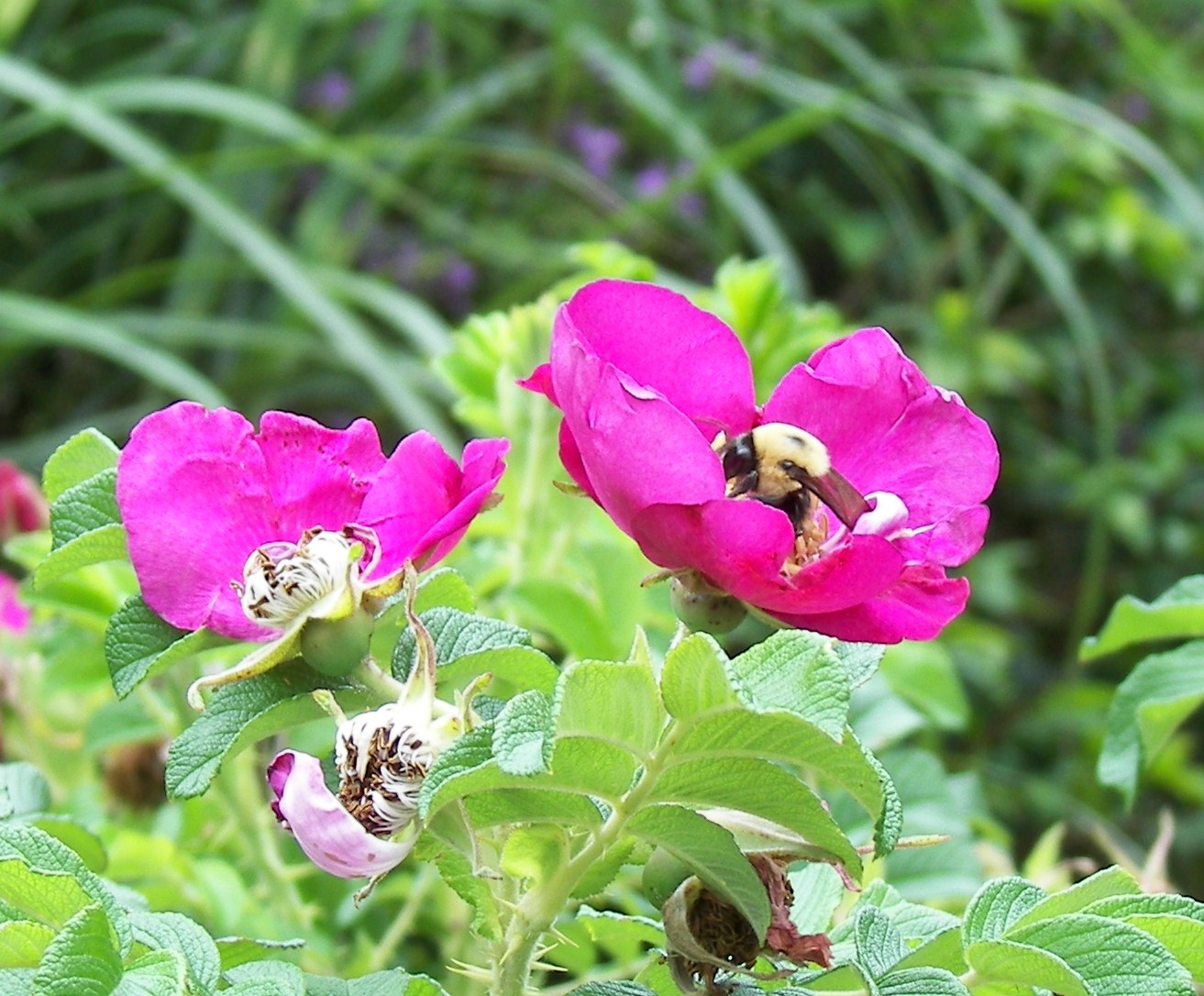
Bumble Bees are big fat 1” yellow and black beneficial insects. They collect both pollen and nectar. They are very social and live in large communities. Their nests are typically in the soil but may be around patios & attics. They are very aggressive if defending their nests. They do not die after stinging.

Carpenter Bees are blue/black 1” oval beneficial insects. They also collect pollen and nectar. They are solitary and live by themselves with their young. Their home is drilled into bare wood. They don’t cause structural problems. They do not die after stinging.

Honeybees are ½” and gold with brown bands. They are very social and live in large colonies. They are the only social insects to live several years in colonies. They will die after stinging once. They typically build their wax nests in tree crevices.

Africanized Bees aka Killer Bees are golden yellow with brown bands, ½” long and oval. They can only sting once and their venom is no more dangerous but they tend to swarm/sting in large numbers when they become aggressive. They live in small colonies.  They have not been reported in this area.

Mason Bees are solitary and build their nests in holes often provided by other insects in trees and lumber. The male does not sting and rarely does the female. They are able to pollinate over 120 times more than a honeybee and emerge in the spring prior to other bees making them very beneficial to fruit trees.

We MUST have bees to have food products pollinated in the quantity needed to feed the world. Since much of our natural bee habitat has been destroyed, planting flowers, bushes and trees that attract bees is essential.

To attract bees (and other pollinators):

• Native and heirloom plants are best because they have not been hybridized reducing pollen and nectar. Bees need these plants throughout the entire spring, summer and fall seasons. Plant single species of flowers in clumps of at least 4 feet to attract the bee’s attention. Plant different shapes of flowers to accommodate different sized bee mouths. They like their flowers to be in the sun and out of strong winds.

• I have many different bees in my garden and the only time I’ve ever been stung was when I didn’t realize one was perched on the crook of my arm and I bent my elbow. With the exception of the African bees, most bees will not bother humans if the bee is not bothered.

“Bees offer us the most beautiful example of community that we shall ever find;
they have much to teach us in this regard. When nature has work to be done,
she creates a genius to do it: the humble honeybee, our most ancient ally.”
From the “Shamanic Way of the Bee”