Monday, June 20, 2011

The "Eyes" Have It

Take a vote and the "Eyes" should be a top priority. According to a study published in "The Archives of Ophthalmology", research linking diet to eye health is growing.

One of the easy and established diet staples for healthy eyes is leafy green vegetables. And, here is where gardeners can have a steady supply all year.
"Spinach is king of the green leafies", according to Dr. Steven Pratt in his book "SuperHealth". See my previous article "Popeye Rocks!" #321 for additional spinach info.

Other greens such as kale, Swiss chard, turnip, mustard and collard greens are also rich in lutein. Lutein is a carotenoid compound that is found in colorful fruits and vegetables and they protect cells from damage.

Eating a diet rich in green leafy vegetables helps shield your macula (the center of the retina) from cell damage that can cause both age-related macular degeneration and cataracts. The time to start eating your green leafy vegetables is not when you are aged - it's NOW!

Planting green leafy vegetables in your vegetable garden is one of the easiest garden tasks and it's not too late to add a row or six. They don't take long to get to the "picking" stage and they don't take much room. They are ideal in the flower garden because they make such a pretty border or filler. Once they reach the stage where they are no longer producing - pull and plant more.

Most garden centers carry seeds or sets. Plus, most every Farmer's Market within this area will have a booth or several selling a variety of green leafy vegetables.

If the taste or texture of green leafy vegetables isn't something you like - incorporate them in other things. Add to a lettuce salad, soups, stews, dips, casseroles, bread, eggs, pasta, seafood and more. Chop fine and they will add to your health and go unnoticed.
Adding green leafy vegetables isn't a once in awhile thing - it should be every day. Using fresh grown produce will insure you have them at the peak of freshness and you will also be in control of using chemical free produce.

Greens will also freeze well if you have an over abundance. Frozen greens must be used in cooked food but it still has its benefits. I throw fresh greens into my home-canned tomato juices and sauces, chicken and beef stock and soup base.

If you have more greens than you can use at the moment, wash, drain in your salad spinner, pick off any bad portions or large veins and tear into bite size pieces. Pack in zip lock bags and freeze. As you are canning later, simply add a bag to the mix. This way you aren't wasting when the produce is coming on stronger than you can work and none gets thrown away or too old.

We used to have wilted spinach often during the summer when I was growing up. Here's how we fixed it:

4 slices bacon
1/2 c. chopped onion
3 tbsp. sugar
1/3 c. vinegar
1/2 tsp. salt
1/8 tsp. fresh ground pepper
4 c. (1 lb.) fresh washed spinach leaves, torn in bite size pieces

Cook bacon until crisp in large skillet. Remove, reserving bacon dripping in skillet. Crumble bacon and set aside. Add onion and next four ingredients to drippings, stirring until blended. Cook mixture 10 minutes over medium heat, uncovered, stirring occasionally. Pour over spinach in large bowl. Toss and serve immediately. Serves 4 to 6.

Notice the spinach is not cooked. This keeps it at a high nutrient level and it doesn't become tough and stringy. Granted the bacon may not be on your list of healthy foods but it's a must for this recipe to have the flavor needed.

Tuesday, June 14, 2011

Eye Of The Beholder

BOLD TIGER
Daylily "Bold Tiger" introduced in 1990 by Stamile.  It's 28 inches tall with a 4 1/4 inch mid season bloom.  Dormant.  Bright orange blooms with a bold red eye.  $20.

REAL WIND 
Daylily "Real Wind" introduced by Wild in 1977.  Receiving Honorable Mention in 1980, this dormant mid to late season bloomer stand 27 inches tall.  The light peach orange 6 1/2 inch blooms have a deep rose eye zone.  $10.

BACK DRAFT
Daylily "Back Draft" was introduced by Dougherty in 1997.  A dormant mid to late season bloomer.  Standing on 27 inch scapes it has 6 inch brilliant orange blooms with a vivid red eye zone.  $50

If you are counting your pennies, here is an article that might show you some options.  Above are three beautiful daylilies (photos and available from Oakes Daylilies).  Although similar, each has their own particular appeal.  I'm not recommending one over the other.  Sooooo what's the point?

IF you have a limited budget and want the beautiful "Back Draft", you might be satisfied with either the $20 "Bold Tiger" or $10 "Real Wind".

SAME:
  • All are dormant (and will do well in our area of the Midwest).
  • They are all about the same height.
  • They all combine orange blooms with large red eye zones.
DIFFERENCES:
  • Two have 6 and 6 1/2 inch blooms while the other has 4 1/2 inch blooms.
  • The forms are somewhat different.
  • The exact colors may be different shades of orange and red.
  • The cost of each.
Whether you think the differences are enough to justify the cost is up to you.  I suspect there are more distinct differences if we could see them side-by-side in the field.  As far as reliability, I've never (and I mean never) bought a plant from Oakes that wasn't healthy and just exactly what they advertise.

Sometimes you simply can't forget that more expensive flower and once bought, you never look back and never regret the purchase.  Other times you may be satisfied with the less expensive - you may even prefer the subtle differences.

In this particular set of flowers, I am the owner of "Real Winds".  Planted last year, I hope to see it in full bloom within the month and then I'll know if the more subtle colors of my purchase will satisfy my desire for this two-toned beauty.

This is one example for the daylily enthusiasts with limited funds or perhaps the thrifty gardener.  Even though there are new wowzer introductions every year, daylilies often have similar characteristics.  With a little shopping, you may find an acceptable substitute. It's in the eye of the beholder. 


“Do not go where the path may lead, go instead where there is no path and leave a trail.”
- Ralph Waldo Emerson

Saturday, June 11, 2011

Q Is For Question

I know, lame way to use "Q" but there are only a few topics relating to the garden that would fit the Q category. 

Question:  "What North American moth is more famous for it's caterpillar stage than it's winged stage?"

Answer:  It's the Woolly Bear Caterpillar Moth  ~aka~  Banded Woolly Bear  ~aka~  Willy Worm  ~or~  Woolly Worm.  The moth is known as the Isia isabella  ~or~ Isabella Tiger Moth.  Is it any wonder children have simply called it a woolly worm?  

It's that caterpillar you see in the fall and used since Colonial times as a prediction for the severity of the coming winter.  Superstition says the wider the brown stripe on the caterpillar's bristle coating - the more mild the winter.  Actually, the coloration indicates how near the caterpillar is to full growth before autumn weather stimulates it to seek a winter shelter. 

As a kid, I remember the thrill of seeing the caterpillars (yes, during more simple times) and announcing to the world the weather prediction for the coming winter.  So much easier than going to meteorological school. 

We'd pick up the little fuzzy guys and haul them around.  They tend to "play dead" when bothered.  They are very docile and easily found basking in the warm sun.

The moth has a wingspan of about 2 inches.  Fore wings are yellow-brown with a series or row of small black dots.  Hind wings slightly paler, slightly pinkish with several indistinct gray dots.  The abdomen has 3 black spots above on rear edge of each segment. 

The caterpillar measures 2 1/8 inch long and covered by stiff bristles.  The caterpillar is actually considered black.  The bands (which typically increase in size as the caterpillar matures) are in the red/brown color around the middle. 
The moth is found in meadows, pastures, uncultivated fields and road edges.  Because of their lack of vibrant colors, we've all probably seen and ignored them.

They range throughout North American except in very northern Canada.  It is from a large family called Arctiidae with most having the hairy caterpillar.  Should you want to do everything woolly bear, there are Woolly bear Festivals in at least four US cities. 

The caterpillar feeds on low herbaceous plants of many kinds, mostly wild; it is seldom a crop or ornamental pest.

Not a pest - fun for kids - this moth is the perfect insect!  

Friday, June 10, 2011

Pie Is A Breakfast Food


When I left home at nineteen I swore I'd never eat cherry pie again. You know how great statements go at nineteen - about a month later I needed mom’s cherry pie.

I was raised in a farm family where women cooked for farmers; dinner was in the middle of the day, meat, potatoes and gravy was a staple, and at least a couple of pies would be made daily.

In addition, we hailed from Swiss German farmers aka Pennsylvania Dutch. The food traditions of this group were hardy and specific. Typically, we ate what we grew and we grew a bounty in that beautiful black Indiana soil.

Farm wives knew they had to have large hardy meals to keep their men strong and healthy for the many farm chores. AND all of us have a sweet tooth. Breakfast, dinner and supper ended with a sweet.  In our house it was pie.

I didn't even know you could buy pie because I took it for granted home-made pie was what everyone had on hand. Even better, I knew if company was coming the pie would include a healthy dollop of vanilla ice cream as the snack.
Alternative text
Although Lemon Meringue pie is still my favorite, we always had at least one cherry pie made at all times.  It was Dad’s favorite and women made what their men liked best.

We may not have fresh locally grown lemons available, but, we certainly can grow cherries in our back yards.  Large spaces can accommodate many varieties.  Small spaces can accommodate at least one dwarf cherry.  All varieties have a beautiful shape, spring flowers, nectar for insects, and a bounty for the picking.  (Exception:  Some ornamentals, like weeping cherries trees, may not produce fruit)

What does a cherry tree need?
·         They must have a cold/dormant season.
·         Grow in full sun.
·         Well drained soil – they will die if they have wet feet.
·         If possible, add well cured manure to the fill hole when planting.
·         Sour cherries are usually self pollinating.  Sweet cherries need another cherry tree to pollinate.
·         Sweet is usually eaten raw – sour for cooking.
·         Make sure the variety you choose is for our hardiness zone – at least Zone 5.  Sour cherry trees are more cold tolerant.
·         Cherry trees require LOTS of water to establish and water during hot/dry years to help the cherries plump up.
·         Birds can strip a tree of ripe cherries in less than half an hour.  You must either net the fruit (and then check to make sure birds aren’t caught in the net) or use other means of protecting the fruit.
·         Don’t let mulch touch the trunk - it will cause fungal disease.  Fertilizing is usually a waste. 
·         Fruit will only come on spurs that are at least 2 years old.  Be careful pruning.
·         In some areas, cherry trees are prone to fungal attack, sometimes wood borers, and slugs.  Specific oil sprays may be all you need in this area.
·         They recover best from transplanting if they are planted in early spring or late autumn.
·         Stake the tree if you live at a windy site.  Remove the stake when the tree reaches one year to promote a healthy root system and strong trunk.
·         Plant late blooming varieties so late frosts won’t destroy blossoms. 

Baked Fresh Cherry Pie RecipeIf you’ve never tasted a cherry pie made from fresh cherries – let me assure you it’s another whole eating experience from the sticky gooey tasteless mess some production pies offer.  Most good cooks have at least one favorite cherry pie recipe.  I’m betting our own Judy and Kay “Cookin’ with J & K” would be willing to share a few. 

Tuesday, June 7, 2011

Herbals - A Commentary

A comment from Robert regarding comfrey prompted me to talk about herbals. 

Herbals have been used as seasonings, medicine, and foodstuff since man has been on this earth.  The value continues today in all those areas.

I enjoy reading Sharon Brown's stories on Dave's Garden.  Sharon was raised in a family where her grandmother was a herbalist to area families.  A herbalist was basically a combination pharmacist and lay physician.  They grew or collected their plants, processed them and prescribed or treated the neighbors and their families.  Sharon often weaves the powers of those herb treatments into her colorful stories. 

Some, such as our Native American Shaman, use herbs in the roll as spiritual advisers.  The use of plants and herbs in spiritual services is more about providing a path for the spirit than as a treatment for physical - although that's way too simple a description.  That's where I'll stop on this aspect because it's a large and many faceted topic. 

Herbalist deal with a large array of plants not necessarily just herbs as we have come to know in our gardening terminology.  As a minimum, plants used by herbalist can be simply an additive for taste enjoyment. At the other end of the ruler are plants that are physoactive and poisons.  In between is an array larger than you want to read.

So why do I bother to mention?  I have never been around the qualified Herbalist and I don't believe the unschooled should prescribe.  For all the benefits plants and herbs provide in our diets or in medical treatments, doing it wrong, can in some instances, actually harm or kill.

Herbal remedies, for the most part, are not USDA inspected.  Those advertised on the net or TV may work or they may not.  Many are imported and have less validation.  Some are merely an expensive hoax.

Contrary to a lack of reading on my part it is actually the opposite.  I've read enough to put out a warning when there is a valid question about an herb use.  I've read about the problems and the benefits.  What I don't know is your particular health, the other medicines you take, if you will follow directions, and if the products you buy or gather are reliable, toxin or pesticide free.

I may recommend using many plants and herbs as foodstuff, but, you won't find me advocating the use of same for health remedies.  I'm not qualified and that's not what I wish to do in this garden blog.  There are other Herbalist or Alchemist blogs and sites for those that wish to delve into it further.

Thanks to Robert for inspiring me to write about my method for handling the question of herbals.  It may not please those who have a particular herb or plant they use for health treatments, but alas, it pleases me to let you decide and for me to stay out of the subject. 
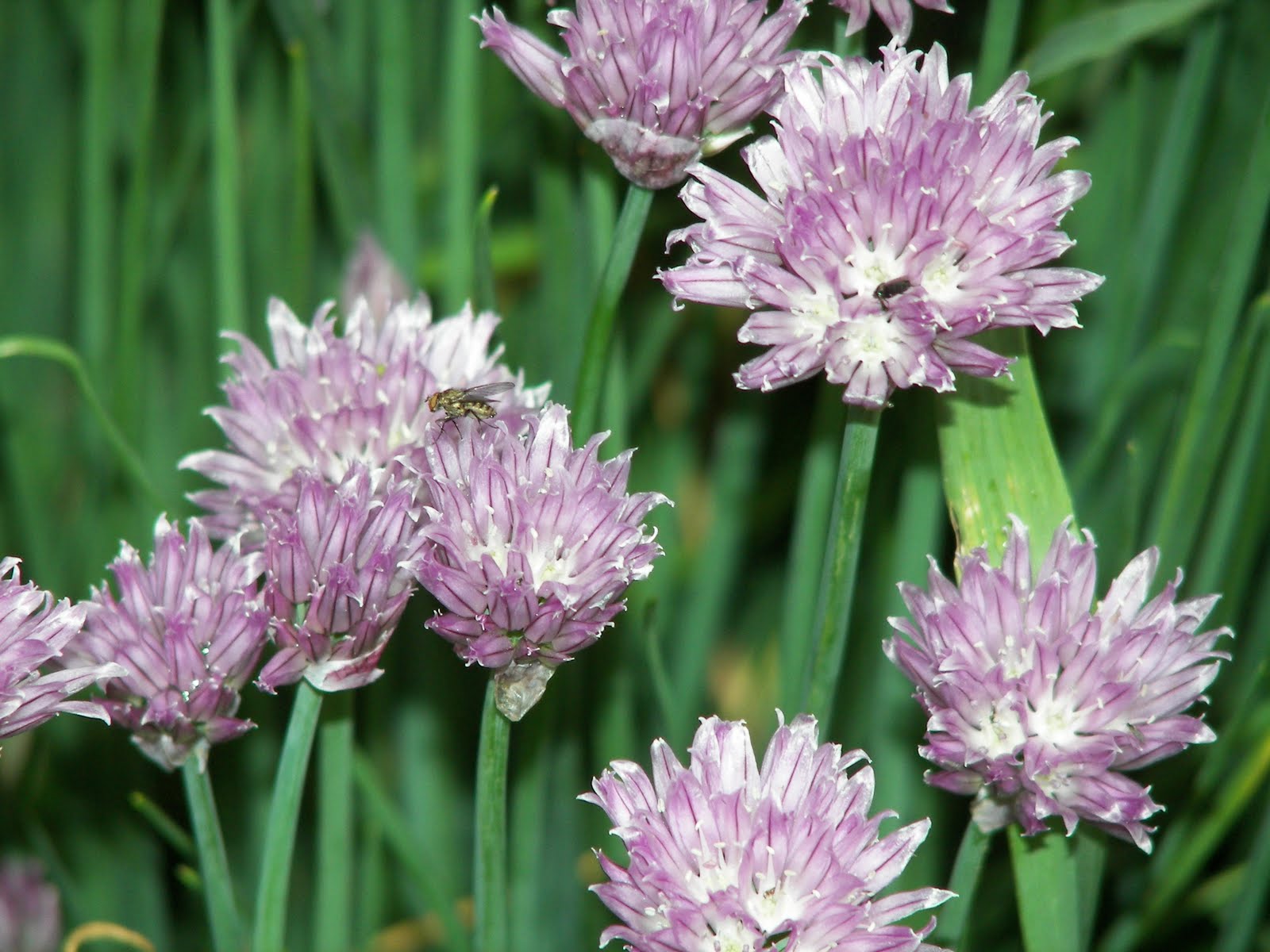
Herbs in photos from top to bottom:  chives, mint & dill. 

Friday, June 3, 2011

P Is For Paeonia

Here in this area, the Paeonia or Peony is blooming full guns.  (See article #10 "Beautiful at One-Hundred" for additional peony information.)


I often cut my peonies and bring them into the house.   Both of the above bouquets have a mix of other perennials.  Pink late blooming lilac on top and iris and daisies included in the bottom vase. 

The fragrant varieties will perfume an entire room for days.  I have a couple of peonies blooming for the first time (they take several years to become happy enough to bloom after transplanting).

This bloom is from Paeonia Herbaceous "Red Magic".  Although described as a double red, it has more of a pink/cranberry coloring in my yard.  It is large and fragrant.

With all the heavy rains we've had, most of my peonies are drooping from weight.  Many gardeners use peony support of one kind or another.  I never think of it until they are laying on the ground...
This is Paeonia Herbaccous "Coral Charm".  It bloomed very early and is considered a deep coral semi double.  It was winner of the American Peony Society's Gold Medal in 1986.  If you are interested in drama and not fragrance, this beauty fills that bill quite nicely.

This was given to me by my daughter, Susan, and I don't know the name.  I like to call it "fried egg" but I'm sure that unglamorous name isn't right.   Hornbaker Nursery has one called "Cheddar Charm" that looks close in description.  It has a lovely fragrance and long bloom time.  It doesn't flop because it doesn't have many petals to hold rain water.


And then there's Bitsey in her usual back porch summer relaxing mode.  She's hoping I'll stop with the peonies and bring in her favorite candy - a rose or two.  

Wednesday, June 1, 2011

June is Busting Out All Over

"And since all this loveliness cannot be Heaven,
I know in my heart it is June."
-Abba Goold Woolson (American writer and poet - 1838 - 1921)

Can it be June 2011 already?  Have we gone from winter to spring and then to summer on such as fast and turbulent weather train? 

The weather that brings beauty to one region, brings devastation to another. 

The abundant rain in our gardens produces the most beautiful lush plants we've seen in years while rain floods many of our neighbors to the south. 

The winds that strengthen the cells of our trees are wreaking havoc in areas where tornadoes have taken life and substance.

While planting gardens and flowers in our good black soil, others have had their soil tumbled and ripped by earthquakes and tsunamis.

And nature goes on in it's series of internal calendars.  In the world of nature in Illinois, we may see:

Young beavers emerge from lodges, young raccoons forage with their mothers, box turtles and blue racers lay eggs, adult Canada geese molt feathers, gray squirrels breed for a second time, whitetail bucks grow antlers, bullfrog breeding peaks, chigger season starts, quail and turkey hatching peaks, pheasants incubate eggs, most deer are born and the bucks separate from the does and fawns, red fox pups leave their dens, most bats are born, American gold finches nest, American toads turn from tadpoles to adults, and channel catfish spawn peaks.

Of the native species:  Purple coneflowers and butterfly milkweed bloom in prairies, cactus blooms in sand prairies.  Other species such as peonies, poppies, and daylilies start full bloom.  Clematis will put on a show.  

I've found most of my perennials are blooming about 1 or 2 weeks later than last year.  The heavy rains have beat down many of my iris and their blooms are now on horizontal stems.  Peonies are traditionally ready for Memorial Day bouquets on graves but mine are just now coming on strong.

Insects are in full force already; beneficial as well as pest.  Heavy winter snow cover and heavy rains are insuring this mixed blessing.  (We've had ticks already.)  These two weather factors are also insuring a heavy crop of weeds.  Crabgrass is taking over the world - OK, an exaggeration but close!    

The June Solstice will be on the 21st.  Hummingbirds have stopped at many feeders on their way north and some may decide to make your yards their summer home.   As the two butterflies pictured show, they are sporting their fresh wings and bright colors.


Whether panic, pest or pleasure, Mara Beamish had it right:  “A garden always gives back more than it receives.”


(Garden facts from Jeff Lampe, formerly of the Peoria Journal Star)