Tuesday, May 3, 2011

O is for Origanum

"Origanum" is the herb Oregano (sometimes called wild marjoram).  Greek for "joy of the mountain," oregano was almost unheard of in the United States until soldiers came back from Italian World War II assignments raving about it.

European Oregano (Origanum vulgare) is the most bland.  Greek Oregano (Origanum herva-cleoticum) is the most common for cooking.  Both belong to the mint family and are related to both marjoram and thyme. Mexican Oregano (Lippia graveolens) is in the verbena family and is one of the most spicy.  The Mexican variety is included in chili powder.  Golden Oregano is used for it's decorative look and not for eating.  Some are hardy to Zone 5.

You may find some oregano mislabeled: 

  • Mexican Oregano can mean Poliomintha longiflora.  It is considered similar in flavor, but stronger than oregano.

    • In Puerto Rico and Cuba, Plectranthus anboinicus can be found labeled as oregano.
    • Thymus nummularius is often used in place of oregano, in Spain.  It is used in perfume.
    If you are planning on making tomato based sauces, plant Oregano in your herb garden this year.  The leaves of oregano are used in meat (especially sausage), salads, pizza, soups, Mexican foods and barbecue sauces.   It is also used in making some kinds of liqueur.
    Oregano Leaves
    Factors such as climate, seasons and soil composition may affect the aromatic oils present, and this effect may be greater than the differences between the various species of plants.

    Some oregano is a tender perennial and may be over-wintered inside.  Try cutting down and heap mulch on top for over-wintering - just might make it through.  In the south, it may be invasive. 

    Oregano leaves are often used in the dried form for cooking - although they may be used fresh as easily.  The dried form may be more flavorful than fresh although it's a different flavor.

    The leaves retain their flavor better in hot dishes if added toward the end of cooking. Heating too long results in bitterness.

    Oregano grows easily in well drained, good garden soil where plants receive full sun. They enjoy a sandy soil.  It requires routine watering. The flowers should be kept cut back to encourage thick foliage - the level of essential oil decreases as it flowers. You can begin to harvest when it reaches 4 inches.  It makes a good container or hydroponic plant but should be replaced about every 3 years when it becomes woody. 

    Oregano planted from seeds may cross pollinate and you may not get what you expected.  The "richer" the soil, the less potent the flavor - do not fertilize.  Oregano has few pests.  Keep area weeded and mulched.  May be added to flower gardens.  Pick in the morning before the leaves warm to get the best flavor.

    An idea:  Put a 1/2 inch thick slice of feta cheese on a salad plate. Serve it sprinkled with oregano (and fresh pepper if you like), and drizzle with olive oil.  Serve with flat bread or crackers.

    And in case you need this:   From Gerard's Herbal (1545-1612-English): "Organy cureth them that have been poisoned by drinking Opium, or the juice of Black Poppy or Hemlock, especially if it be given with Wine and Raisons of the Sunne".

    Photos thanks to Herb World.

    Sunday, May 1, 2011

    Spring Fling

    Had a delightful yesterday visiting "Distinctive Gardens" in Dixon and "Red Barn Nursery" by Sheffield.  Always so much fun to see what's new in the plant world. We enjoyed a rainless day made twice as nice because I was with friends.

    Every nursery and garden center is different.  Their individual focus is what delights. 

    My first time at DG, it was obviously a visit with the visually inspired owners.  They are particularly adapt at creating combinations of plants for beautiful and unusual container gardening. 

    Area stores are having more of the cone shaped hanging baskets and here are a couple of their offerings.

    Many of DGs most beautiful planters contained mostly non flowering plants.  Most of us have been conditioned to expect mostly flowers in our pots.  The foliage containers opened a new door - and were certainly beautiful.
    Shown at left and potted in a fiberglass "rock", this is an example of how well they combine plants.  DGs is about inspiring through display. 

    I'm sure their landscaping and other plants will only improve as the season matures.  In addition to the plant sets and containers, they have a nice selection of trees and bushes and some beautiful hand crafted items in their shed area.

    After a great lunch at ZBest Restaurant in Sheffield, we headed to the "Red Barn Nursery".  The RB is not about display, it is totally about offering an abundance of healthy beautiful plants which they grow themselves. 

    RB is often the place to find "the hard to find" and heirloom plants.  Their herbs are always a treasure.  Since they raise their own plants, this is a place to return to as the season progresses.  Some things come on early/some later.  Unlike big box stores, when RBs supply of plants is gone - it's gone for the season.


    RB offers some of the most beautiful and unusual geraniums in this area.  The supply you see pictured will be mostly gone by Mother's day.

    Both nurseries are privately owned and managed.  Both show a real love for the beauty and individuality of plants.  Both are a treasure and both have reasonably priced plants. 

    So - what did I buy?  I managed to put off garden vegetable and herb plants because of the cool weather we are having.  Besides a nice "Delft Lace" Astilbe for my new bed at the front of our woods, I focused on plants for my pots.

    A few of those geraniums from RB and a selection of foliage from DG.  I was especially excited to find "Graceful Grasses' King Tut"  I'll show more on the individual plants later.

    Meanwhile:  Support your locally owned nurseries and garden centers.  Most (as are both of these) are hard working and talented business owners obviously passionate about their profession. 

    “What a desolate place would be a world without a flower! It would be a face without a smile, a feast without a welcome. Are not flowers the stars of the earth, and are not our stars the flowers of the heaven.” - A.J. Balfour
    

    Friday, April 29, 2011

    Flowering Toppers

    When we love flowers, all things floral may pop up and the Royal wedding was no exception.  You must admit the Brits know how to dream up women's hats and today was certainly no exception.  These floral trimmed hats weren't at the wedding but inspirational to say the least.
    The Queen has been said to own over 5,000 hats.  Royalty watchers say it's to help people recognize her.  With the hats she wears, she simply has to love hats and flowers.

    This little orange number is one of her early flower crowns.
    Flowers are everywhere for this blue number
    Is it wrong to say "she's a cute 85 year old"?
    William's mother with flowers in her hair and William's step mother with a pink creation.
     The new bride's hat style will fit right in with the Royals.  I'm thinking there is some serious Super Glue involved with these popular little cliff hangers.
    This is one of my own hats from years ago.  Not exactly Royal class - maybe garden class ...  And, I promise to get back to something more garden next time - just too much hat fun to resist. 

    All Hail The Queen

    Doing a "Royals of England" garden article just in case you haven't had enough in-depth coverage of everything from Royal shoes to zippers.  Whether you enjoy the pageantry, the opulence, the history, or even the silliness - it's definitely a wide topic.

    Many heirloom roses carry the names and descriptions from the Victorian England era.  Since Queen Victoria loved her gardens, many focus on Royalty.  A few are listed below and are rated for our Zone 5.  Enjoy.
     THE PRINCE'S TRUST"The Prince's Trust", an English Legend rose.  It's a fragrant climber rated for Zone 5.
    ROYAL PAGEANT™ (HARblend)(Della Balfour)"Royal Pageant" is another fragrant climber for this area.
      THE PRINCE®   (AUSvelvet) Pat. 8813"The Prince" has old rose perfume on the royal velvet substance.  A David Austin rose.
    REINE VICTORIA"Reine Victoria" was named for Queen Victoria of the United Kingdom.   Developed in 1872, it is extremely fragrant heirloom Bourbon rose. 
    Rosa "Queen of England" is a Grandiflora tea rose. 

    Not a rose, but, in the carrot family - "Queen Anne's Lace" has one lore crediting the lace making skills of Queen Ann of England for it's name.


    The current Queen Elizabeth wore a coronation gown which was embroidered with floral emblems for the countries of the Commonwealth: English Tudor rose, Scots thistle, Welsh leek, Irish shamrock, Australian wattle, Canadian maple leaf, New Zealand silver fern, South African protea, lotus flowers for India and Ceylon, and Pakistan's wheat, cotton, and jute.

    Daylily "Royal Prince" (below) is one of many holding royal titles. 

    "God Save The Queen" daylily. 
     
    And finally, there are the many flower gardens with Royal connections.  One of the most famous is the Kew Royal Botanical Gardens.

    Thursday, April 28, 2011

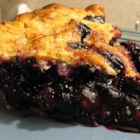
    National Blueberry Pie Day

    Do you remember that cute little commercial stating "Boo berries are our friends"?  Well folks - it's national blueberry pie day!  For only 80 calories for a cup of plain blueberries and absolutely no fat, you can have the friend of a lifetime.


    While researching this article, I found no down side to blueberries unless you are allergic or something specific to your own system.  Granted they are a little expensive to buy off the counter but so is steak and we seldom see Americans turning away from the cost of good meat.  It becomes a choice as to what we spend our money on and here are some reasons to consider blueberries a need rather than an expense.   
    According to a University of Michigan Cardiovascular Center study, blueberries have the following health benefits:

    1. The highest antioxidant capacity of all fresh fruit - it boosts up your immune system and prevents infections.  With a strong immunity system it helps your system resist colds, fever, pox and some other viral and bacterial communicable diseases.
    2. Neutralizes free radicals which can affect disease and aging in the body.  It's the presence of Anthocyanin, the pigment responsible for the blue color, plus all the vitamin C it contains.
    3. Blueberries may help reduce belly fat and risk factors for cardiovascular disease and metabolic syndrome. This is an on-going study and the conclusions not totally understood for humans.  Belly fat generally indicates an enlarged liver and is linked to obesity and insulin resistance, a hallmark of diabetes.
    4. Helps promote urinary tract health by inhibiting growth of the bacterias which may cause infection.
    5. Blueberry extract has been found (in clinical studies) to slow down visual loss. They can prevent or delay all age related ocular problems like macular degeneration, cataract, myopia and hypermetropia, dryness and infections, particularly those pertaining to retina. Data reported in a study published in the Archives of Ophthalmology indicates that eating 3 or more servings of fruit per day may lower your risk of age-related macular degeneration.
    6. Blueberries can prevent and heal neurotic disorders by preventing degeneration and death of neurons, brain-cells and also by restoring health of the central nervous system. They even heal damaged brain cells and neuron tissues and keep your memory sharp.
    7. The high fiber content, the anti oxidants and the ability to dissolve the ‘bad cholesterol’ make the blueberry an ideal dietary supplement to cure many heart diseases. It also strengthens the cardiac muscles.
    8. The fiber (roughage) in blueberries will keep away constipation if you eat them by the handful.  Other components will improve digestion
    9. It is believed blueberries can prove an excellent remedy for colon and liver cancer as well as prevent some cancers. Studies show a significant reduction in ovarian cancer risk.
    10. Blueberries are very good anti depressants.
     Ripening Blueberries.Want to cut the cost of this beneficial?  Plant your own blueberries.  There are three kinds of blueberries and they are classified by hardiness zones.   Highbush for Zones 3 - 7, Rabbiteye for Zones 7 - 9 and Southern Highbush for Zones 7 - 10. 

    The Highbush grow from 8-10' (h) x 6-8' (w), Rabbiteye grows to 15' (h) x 10' (w) and Southern Highbush is from 3-6' (h) x 4-5' (w).  They need full sun.

    Plant today because it takes three years to produce a small harvest and they won’t really begin to produce fully until about their 6th year.

    These beauties are native to our North America.  Growing in the wild, they are smaller berries but professed to be the sweetest.  Cultivated blueberries are continually being bred for higher yields, heat and cold tolerance and better pest resistance.  The varieties mentioned above are old and you may see new varieties every year at your nursery or greenhouse. 

    For this area the Highbush (or Northern Highbush) is usually recommended.  Highbush will self-pollinate, but yield and size is improved with cross pollination.  Planting a variety of plants allows for a longer production time.  Early: 'Earliblue', 'Collins'; Mid: 'Blueray', 'Bluecrop', 'Berkeley'; Late: 'Jersery', 'Patriot'.

    The flowers are small, white, bell-shaped flowers hang in clusters in late spring.  Bees find them especially inviting since they are one of the first pollen flowers of spring.  The berries ripen over time, from green to a deep purple-blue.  The leaves are a pointed oblong, oval shape and substantial and almost leathery to the touch. They turn a brilliant red in the fall making them a beautiful landscape plant.


    The only reliable way to know if blueberries are ready to pick is to taste one or two. Blueberries are their sweetest if allowed to stay on the plant at least a week after turning blue.  Mature blueberry bushes produce about 8 quarts of berries per bush.


    Blueberries like a very acidic soil, with a soil pH in the range of 4.0 to 4.5. They also like a soil rich in organic matter. In heavy clay soil, blueberries will fare better in raised beds.  Make sure existing beds continue to have the pH range needed. 


    Look for bare root plants that are 2-3 years old. Older plants suffer more transplant shock. Plant in early spring. You can mix some peat moss into your planting hole, so keep the soil loose, acidic and well-draining.


    If you have only one or two plants, space them about 4-5 feet apart. To plant rows of blueberries, space plants about 4-5 feet apart in rows that are 9-10 feet apart.  Plant so that the roots are spread out in the hole and completely covered in soil. If they were container grown plants, plant about 1" deeper than they were in the pot. Mulch after planting. Evergreen wood chips, like pine or cedar, sawdust and pine needles will help keep the soil acidified.


    Water in well and be sure they get a deep watering at least once per week. Blueberries tend to be shallow rooted and need at least a couple of inches of water each week, more during dry spells.  Don’t fertilize your blueberries their first year. In additonal years, use any fertilizer for acid loving plants, including blueberry food and azalea food.


    All fruit bearing bushes and trees need some pruning and blueberries are no exception.  The first 2 years, all you really need to do is remove any flowers that appear. Your plants will get bigger and more vigorous because of this.  You can leave the flowers on for the third year. You won’t get many berries, but no pruning is necessary until the 4th year.


    Beginning in the 4th year, you’ll prune your blueberry bushes in early spring, while they are still dormant. Prune out any dead or injured branches, crossing branches and weak, spindly branches.  A blueberry bush need to be open allowing light to reach the berries in the middle of the bush. Berries form on the fruiting spurs of side branches. The flower buds will be larger, plumper and rounder than the pointed leaf buds.


    Birds are the biggest problem for fruit production and netting helps.  Plant disease resistant varieties for an easier and healthier plant.


    A little side note:  I like to freeze my blueberries on a rimmed cookie sheet.  Then put into a freezer bag.  They are like candy and a great snack when I think I simply MUST have something sweet.  Kids love this treat.  Or yum onto a piece of blueberry pie - really it's OK - it's a National Day!

    Wednesday, April 27, 2011

    Walking the Line

    Soil temperatures are important to those of you who plant seeds and plant sets each spring.  I've always winged it since I never really knew where or how to get accurate information.  I would error on the warm side rather than take the chance of seeds rotting or not germinating.  

    Today, Anthony Peoples (WQAD meteorologist) commented on this very subject and I asked him where I could get info on a regular basis.  The door opened and he gave a resource to me and that led to another.  Love it when it works so well - and thank you Anthony!

    http://www.agri.state.il.us/news/markets/cropreport.pdf

    http://www.isws.illinois.edu/warm/soiltemp.asp 

    These both are from an Illinois perspective and if your computer doesn't process pdf files, use the other.  Other states will have sights sponsored by their USDA or their local university specializing in agriculture. 

    (I might add the U of Illinois has downsized and some of their on-line informational columnists have been let go.  Back information usually stays on the web history.  It's sad so many fine educational employees will no longer have U of I employment or be a benefit for the state's residents.)

    For the farmer, soil temperature is a major importance for nitrogen application and planting.  There is a massive amount of data regarding how and why.  It is interesting reading but I'll leave the fine points to those who need to use it for their livelihood. 

    If you use lawn and garden chemicals, correct soil temperature is often a necessary criteria for successful application.  "Already the crabgrass preventers are showing up in the stores. But that doesn't mean you should use them yet. Crabgrass seeds will not germinate until the SOIL temperatures are 55-65 degrees for 7-10 consecutive days. For northern Illinois that often does not happen until late April into early May. Even in a warm spring it is unlikely that you will need to use them before the end of April."  U of I website.

    Along with soil temperature, the last frost date is important for planting tender annuals.  Typically, we have been told Mother's Day is the last day of concern for frost.  Realistically, that is just a fifty fifty chance - meaning 50% chance of it working either way.  We have had frost at the end of May - just be prepared to cover exposed tender plants if the forecast calls for frost.

    Although a little late for this information - if a plant seed has a long germination time, it will be difficult to have a wealth of produce before the temperatures drop in the fall and production stops.  The farther north you garden, the shorter the window of growth opportunity.  Those seeds need to be started indoors and transplanted outside to get a jump on the game.  That - or look for plant sets at your local nurseries or garden centers.  

    Because "soil temperature" is confusing for most casual home gardeners, most product directions simply list "air temperature" as a defining gauge for planting tender annuals.  Generally, you don't want established plants to sit unprotected if the night temperatures dip below 60 degrees.  

    I've seen clean gallon plastic milk jugs used as frost protection.  Leave the cap on the spout and cut off the bottom.  Push a little into the ground to keep the wind from blowing over.  If there is going to be cold AND high winds - you may want to use garden pins or rocks to hold an old blanket over all the jugs.  Take off during the day so it won't become an oven that bakes the little sets.  

    Here's the rub:  the quicker/sooner you have a plant growing in the spring, the quicker/sooner you have produce and the more months of produce which equals more produce.  An unprotected tender annual or seeds that don't germinate because they are planted early will mean meager or no produce.

    Yep, because your northern Illinois weather is mine I walk the fine line on planting dates.  (Is anyone whistling a Johnny Cash song right about now?)  Bad pun-bad pun!!  

    Tuesday, April 26, 2011

    Cute Little Trick

    I added a cute little trick to the bottom of my blog allowing those interested to have new "For The Love Of Gardening" articles sent to your e-mail address. 

    I added this feature about a month ago.  I wanted to make sure it worked in a manner I liked before I recommended to readers.  It's pretty slick and doesn't have a bunch of added advertisements or pop-ups.  It's the article, including the photos, and easy to read. 

    I don't use your e-mail address for anything - period - nothing - zip.  If you want to correspond, the comment section provides that avenue.  I don't give out my e-mail address to readers for a couple of reasons.  First - I use my e-mail for family and business.  Second - the only time I did, it was used as a way for someone's agenda to flood my address.   Thanks for understanding.

    Thank you to everyone who takes the time to read these little stories.  I've always maintained that gardeners are the nicest people and I'm gratified to be touching some of you with "For The Love Of Gardening".