Sunday, July 3, 2011

R Is For Red

There's so much to say about the color RED:


The color red is an intense color that reflects heightened emotions and senses.  When viewed, it enhances the metabolism, increases respiration rate and raises blood pressure.  "I'm seeing red." is an expression of anger. 

Because it is highly visible, it is used as a warning on stop signs and lights.  It brings a word or item to the foreground.  A "Code Red" is emergency language for someones heart stopped although that code has been adopted for other emergencies, too.

Red indicates courage and it's why it's in many national flags.  Red flowers at patriotic events symbolize valor.

Red stimulates people to make quick decisions and is used in the marketing world for that very purpose.  Check out the next time you see an advertisement in red - it is deliberate and could be a "red herring".
Red is used in literature, music and advertising to suggest erotic and passionate:  red-light district, "Lady In Red", The Scarlett Letter, red lipstick, and "paint the town red." 

Red is marketed as high energy:  race cars, energy drinks, games, sports, etc.

Certain races of humans were considered "red":  Ancient Egyptians and Native Americans.

A red front door in Colonial times meant "welcome" as well as in Feng Shui.  Red on the doors in Biblical times symbolized Christ's blood and evil would pass you by.

~ Red in the Garden~


Valentine's Day and red flowers are a given.  The red rose, thanks in part to the florist industry, is know as the universal flower of love. In addition to the rose, a red carnation or tulip signifies "love".  A red carnation marks a couple's first anniversary and is the flower for January births.

Veterans of Foreign Wars members and American Legion Auxiliary volunteers distribute paper red poppies in exchange for contributions to assist disabled and hospitalized American veterans.  The red poppy is used to symbolize blood shed on the fields of battle (Originally WWI in France).

All seasons have vegetation in the color red.  Our beautiful spring tulips, the daylilies of summer, maple tree leaves of fall and the stems of the Red Twig Dogwood in the winter are examples.

Red may be used in the garden in much the same ways as the rest of the red culture.  It evokes passion, love, highlights and adds a punch. 


A bouquet of red flowers, a glass of red wine, a pair of red flip flops, some red sunshine, and by golly we're sliding summer into love.   

Friday, July 1, 2011

LOVE Small Towns

Being an old farm girl, I still enjoy the local County 4-H fair.  It's wholesome, it's educational, it's family and friends, and it's small town at best. 

Our local paper had a "fair" insert and it was sixteen pages.  That's more than the Wall Street Journal on a good world news day. 

Since I had again been a judge for the "Horticulture Vegetable Plants, Horticulture Vegetable Market Basket and three categories of Floriculture", I take special interest in seeing how all the projects went, pictures of the kids going to the State Fair, competitions, carnival, royality and entertainment. 

A handsome young man, the County Fair Board President was pure farm boy.  Tall and lean with a big belt buckle and farmer tan where his cap rests.  Did my heart good to see a person his age so involved in making the fair bigger and better.

It was also rewarding to see so many parents and grandparents at the judging.  Parents who are able to take an active part in helping their children in 4-H are rewarded as much as the children.

Perhaps not for every taste in the world, the local county fairs have some pretty great entertainment.  In addition to watching the 4-H and open livestock shows, there's always the rabbit and various pet shows. 

The horse shows have a little something for everyone.  4-H project horses, open class shows, miniature horses, the rodeo and harness racing. 

Tractor pulls, pie baking, cooking, hobby displays, crops, skills and more and more and so much more for a few dollars admission.  Cost of admission and the cotton candy, elephant ears and some other stuff that only tastes good if you are at a country fair!

4-H has added many interesting categories for kids and I'm happy to see them pulling families that don't have farm opportunities into the organization.

And, I'm reading along, page 15, and I now have my fun for the day:  A photo of the "Scoop the Poop" game.  I'm telling you, "I LOVE small towns!"             

Thursday, June 30, 2011

OOeee OOeee Baby


Garden walks and public garden tour events are  "heating" up - along with the temperatures and humidity. 
climatron

Here's some hints that might make your experience a little better, more comfortable and healthier.
  • Check out the forecast for the day you plan to be touring, then be prepared.
  • Some events are in the evening hours when it's a little cooler. 
  • Take a light colored umbrella to provide shade.  A small one that folds with a loop handle.
  • Don't carry - pull.  Use a wheeled small carrier for all your stuff.  Call ahead of time to see if it's allowed.
  • Drink LOTS of water.  Nothing else hydrates better than water.   Alcohol causes dehydration.
  • Have a light colored hat that allows air to circulate; loosely woven with cotton inside binding.
  • Use sunscreen and re apply.  The non greasy ones aren't as hot.  Some come with insect repellent.
garden symposium

  • Tennis shoes with white cotton socks.  Sandals with leather not plastic insides.
  • Put baby powder on after your morning shower especially in creases and where clothes bind.
  • Cotton clothes and underclothes absorb moisture.  Synthetics seldom breaths.
  • Dark colored anything absorbs heat and you'll be hotter. . 
  • Lot's of hair products lay on the scalp and your head will be hot.
  • Putting loads of cream on your body is akin to wrapping yourself in plastic wrap - it doesn't breath.
  • Fragrance intensifies when you sweat and attracts insects.
  • A large cotton handkerchief has many uses.  Draped over the back of your neck, wet and laid on top your head, wipe off sweat and clean off sticky hands.
  • Disinfectant (no water) hand wash is mostly alcohol.  Cleaning your hands with it will make them feel cooler.
  • Consider taking one of those little portable folding fans.
  • Sunglasses help protect the eyes from the glare and damage by too much sun.
  • Take a lot of breaks in the shade.
  • If the option is available, walk on soft surfaces instead of concrete. 
  • Eat regular light meals or snacks.  Relax and sit in the shade while eating.
  • Stroll instead of rushing. 
  • Understand your medications and how they react with heat and sun. 
  • The older and the younger a person is, the easier it is to be bothered by too much sun & heat.
Get out of the sun and drink lots of water if you: 
  • stop sweating
  • get a headache
  • are dizzy or weak
  • urine is dark and strong smelling
Seek first aid if you have:
  • Severe pain
  • Severe blistering
  • A headache that's very painful
  • Are confused
  • Nausea or vomiting
  • Faint
  • Your existing medical condition becomes acute.
Scare you?   Hopefully, not.  Visiting and touring gardens is some of the best fun for gardeners.  Being prepared is a good way to have the day perfect from sun up to sun down. 
  
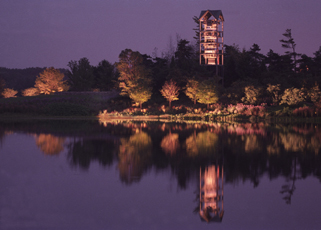
Photos from top to bottom:  (Evening Island at the Chicago Botanical Gardens) (Missouri Botanical Garden) (Colonial Williamsburg VA historic gardens) (Oakes 2011 Daylily Festival)  (Hollister House Garden, Washington CN). 

Wednesday, June 29, 2011

The Issue of Jerry Garcia

I don't know how grateful a dead daylily bloom is (Grateful Dead ~ Jerry Garcia - Get it?).  I'm going to visit the subject of good manners and deadheading daylilies.

"Seriously?"  OK, this issue doesn't rank up there with global bank failures - unless you're the owner of a garden full of daylily plants.

Obsessive gardeners (are there other kinds?) simply cannot walk outside in the summer without bending to pull a weed, pinch off a dead flower, or defeat a bad insect. 

"Sittin' Here In Limbo":  This is true in their own garden and it's sometimes true in every private garden, city scape or public garden they visit.  Who doesn't appreciate a little help - right?  Weeeelllll - not always so right.

"Pig's Boogie": Let's put this in perspective:  Do you reach over with your finger and pick spinach out from between your friend's front teeth?  Really?  You don't do it because it would be terribly impolite and invade their personal space and eeewww anyway.

"Think":  It's a little like that with deadheading without permission.  Here's the rationale:

"The Thrill Is Gone":  Hybridizing daylilies requires the seed pods be allowed to develop.  A well-meant deadheading will stop the seed heads from developing and end an opportunity to develop a new daylily.  And I might add, end a friendship.

"Shady Grove":  Deadheading another person's daylilies (or any other flower)  insinuates, by that very action, another gardener isn't quite up to snuff - at least up to your standards. 

"Wayfaring Stranger":  Deadheading another person's garden is like finding fault with a child's painting because they didn't stay in the lines.  It's their creative process that you are inferring is somewhat lacking because it doesn't meet your own high standards.

"There Ain't No Bugs On Me":  Some well-meant folks feel if they "show" others how to do things right - the other person will be grateful.  I've never seen anyone grateful of unsolicated advice.  Discuss with them if you must and offering might be fine.  If you discuss and offer and the result is "no", then take it with good grace and find something else to do.

"Up From The Desert":  I've had daylily friends prefer a certain method to their deadheading.  That method is important to them and their gardening: In a bag, on the ground, between rows, in the a.m., at dusk, or compost.

"Nine Pound Hammer":  The issue of public gardens is one of risking getting kicked out or worse.  It's not your land and you can be charged if they so choose.  Granted they may be happy for the help - the trick is to ask first.

"One Kind of Favor":  The issue of city maintained gardens and pots is a little more loose.  Most are hurting for volunteers to help.  I would still call to offer help. 

"Knockin' On Heaven's Door":  The deal is if you can't resist the urge to help others - call and ask to help FIRST.  (Freedom House, the women and children's domestic abuse shelter, lost their garden volunteers this summer.  Let me know if you'd like to help them.)      

Jerry Garcia


More on dead heading daylilies:  Freakin' At The Freakers' Ball - Article #179.

"American Popsicle":  If your allergies are making your sinus hurt around your nose and eyes, eat frozen fruit.  I freeze on a cookie sheet:  individual grapes, blueberries, strawberries, slided peaches & pineapple.  Put in the feezer in ziplock bags.  A few in a bowl and the cold apparently makes the swelling go down.   It doesn't take much, good nutrients and low calorie.

Daylilies photos - top to bottom:  Lunar Max, Night Beacon, and Chicago Star.  J.G. photo from open net pages.   

Monday, June 27, 2011

We Do The Walk

I made this little apron from fabric and trim scraps.  Originally, I planned to use it for a homemade version of Leman's clothespin bag.  But (there's always a "but" in garden stories), one day I grabbed it when I did my morning garden walk. 
Especially during daylily season, I like to start the day with my camera for the latest beautiful shot.  I keep a semi-decent recording of when something blooms in the yard and my thoughts.  I take my photos and post them to my external hard drive.  It's a (one of them) garden obsession.

Even though my camera hangs from a strap around my neck, I was always dropping or fumbling with the other stuff. The morning I grabbed the apron, easier set into the routine.

I usually carry (in addition to the camera) a small notebook, pencil (writes in rain), an OFF clip-on mosquito repellent, my seasonal allergy handkerchief (sigh), small clippers/scissors, sunglasses and whatever.  And everyone knows a gardener can't step into their garden without bending over to do something.  This apron falls forward and things don't empty out of the pockets.

If I was making another, I might add a small loop on the waistband to hold the Off clip out of the way of the pockets.

In case you are wanting to make a similar apron this is my best shot as describing:

Finished: 
  • 14 inches from top of waistband to bottom of hemmed seam.
  • 14 inches from side to side.
  • 2 inch deep waistband (I didn't line it since I was using a sturdy fabric)
  • 6 foot long waistband (This allows a coat to be under it)
  • 5 inch inset for pocket tops and 5 inch side drop.  (If you have large hands make larger.) 
  • 5 inches between top of pockets
The entire back of the apron is the back of the pockets.  I used 1/2 inch seams to make cutting/measuring/and turning easy.

Cut:
2 - pieces of apron fabric the same size for the body of the apron.
  •   Fold both the top and bottom in half and cut the rounded  bottom edges in equal measurements. 
  • Fold the front in half and cut out rounded pockets at the top.
Cut out the waistband.  Press all pieces.

I used some cotton lace to trim the pockets and give them strength.  The bought version uses seam binding.  I recommend one or the other since the pockets will get quite a bit of wear & pull.

I double stitched everything for strength.  First hem and trim the pocket openings.  Put wrong sides of the apron body together and stitch around the outside (do not stitch around the pocket openings).  Turn and stitch the entire outside edge.  Where the pocket cut out is will have to be rolled and stitched. 

Press the length of the waistband in half.  Press under the edges 1/2 inch and the end under 1/2 inch.  Stitch the back side of the apron to the backside of the waistband.  Fold the waistband over towards the front and pin entire waistband together including turning in the ends.  Stitch together. 

I know I'm not very good at describing the sewing process - hopefully you will have some knowledge of patterns and sewing and can visualize what I'm describing. OR, there is always the Leman's product. 

My fabric was a durable heavy cotton canvas type.  Denim or any tough outside materials would work also.  Lightweight materials will not hang stiff enough to be easily used.  It should be washable.  Because of the waistband, it can be looped over a hook when not in use.  

This was my inspiration:  Lehman's clothespin apron.   www.lemans.com  It sells in the red, a blue or black and for about $25.  In case you haven't visited their web store, it's one of the best for quality functional and mostly non-electric devices for home and homesteads. 

Saturday, June 25, 2011

Who? Me Worry?

Was talking about worry last evening with a friend and it made me think of gardening worries.  That wonderful gift of gardening that I so love - could it be connected to anything worrisome? 

Anytime, you are dealing with nature, there is the unknown.  As much as humans have learned over generations, the scientific community has discovered, and nature has revealed - something new (good or bad) has always changed the course of our gardens and landscape.

We have a a problem, we research the available options, and we try to control the problem with one of the options.

Realistically, we don't have all the solutions and not all solutions work.  Not all solutions can be accomplished for one reason or the other:  There's finances and the physical limitations of the gardener or the plot of land.

It can be as disastrous as tornadoes and as tiny as the Japanese beetles. 

So, now we realize we are not singled out by Mother Nature for garden disasters - right?

The next logical step is the realize if these things happen, and many can't be totally stopped, are we to worry about keeping everything perfect?  Perfection and control - Folks: "GIVE IT UP".  You can't control nature's destructive forces and you will constantly have to deal with lack of perfection.

Even those gardens where there is no limit to the amount spent on solutions, the amount of garden employees/volunteers, or the horticultural help of professionals - you will not be able to totally control or perfect.  Gasp!

How do you know enough about yourself to admit you worry about your garden?

  • Do you not invite people to your home in the summer because everything isn't just like you want?
  • Do you feel weeds are a direct reflection upon your gardening skills?
  • Do you mourn the loss of a plant as if it was a member of your family?
  • Do you physically keep working in your yard long after you start hurting? 
  • Must you always have one better or more beautiful than what is currently thriving?
  • Is your yard totally weed free, insect free, and damage free?
  • Are you buying every new gadget and chemical advertised to make a yard perfect?
  • Do you feel it's alright to use products that endanger the environment if it works especially well?
  • Do you judge other gardens by their perfection or can you enjoy the spots of beauty?
  • Do you tend to compete with other gardeners?
  • Would you rather not invite children, rowdy adults or pets into your yard for fear they might mess it up?
  • Do you feel guilty throwing away a half dead plant because it might have feelings of rejection?

Have I hit any of your secret control and perfection issues?  I know I've hit a few of mine!

All a gardener has to do is experience something major life altering to understand the quest for garden control and perfection is not at the top of life's needs.  It causes us to worry too much about the impossibly inconsequential (The II factor). 

I have preached my Saturday sermon and I might add that I thank God for the good gardening life and pray I understand the bad portions of life can be teachers that make us strong - much like a well-pruned bush.   

Note the promise: “Whoever abides in me and I in him, he it is that bears much fruit, for apart from me you can do nothing.” (John 15:5)


A reminder:  by clicking once on a picture in the blog's text, it will enlarge enough where you can see the little garden details:  insects, a small plant, or perhaps an imperfection that I've learned to simply ignore or embrace.    

Friday, June 24, 2011

Butterfly Magnets

I don't usually write an article after reading someone's text because it always seems a little uninspired.  This time, I'll give credit to the inspiration to Annie's Annuals.  http://www.anniesannuals.com  Annie's is in California and at times she gardens a little outside of my conservative Midwest farm roots.  (Roots - is that a pun??)  I love her wild abandon in the garden and her love of interesting and unusual plants.   She advertised milkweed today and she was spot on the money with her advice to grow more milkweed in our gardens.

Milkweed is seen on most of our (if it's not sprayed or mowed too early) road sides. Because farmers have their own reasons for mowing and spraying, the answer to attracting Monarch and other butterflies is planting your own milkweed.  Here are the first two suggested by Annie and I use parts of her descriptive quotes:     

Asclepias speciosa "Showy Milkweed"
Undeniably stunning in bloom, everyone who can should grow at least one of our native perennial "Showy Milkweeds" as it is THE native host for our western Monarch butterfly, which lays its eggs on the stems and leaves. Thriving in poor, dry , well-drained soil, it's tough and vigorous with gorgeous large silvery-green, soft-to-the-touch leaves. Atop the 3' to 4' stems, the remarkably FRAGRANT large round clusters are 4" to 5" across and made up of lovely velvety pink and white star-like flowers. Bloom season occurs late Spring to late Summer. Sometime after bloom it will go deciduous but not to worry, it will certainly return next Spring with more stems. Grow it next to your driveway, parking strip, somewhere your hose won't reach, on a hillside and especially in a xeric or native garden. Does well in a large pot, too, 5 gal. & up.When planted it will temporarily go dormant. Once it's established, you'll be delighted with the fruits of your patience. And so will our Monarchs, who can smell a milkweed a mile off. Look for their incredible chrysalises, glossy turquoise and emerald ringed with unbelievable glimmering gold beads.  Perennial in our Midwest zone 5.

Asclepias syriaca “Virginia Silk”
Very possibly the most stunningly beautiful of all Milkweeds and the most fragrant! Adored by gardeners & Monarch butterflies alike, this species, a native perennial to much of the US (including here), bears large 4” pinky-mauve spherical bloom clusters from early to mid-Summer that are powerfully & deliciously scented of lilacs & hyacinths. Un-branched in habit with strong upright stems 3-5’ tall, it also sports attention grabbing broad rich green foliage that creates a nice contrast against finer leaved plants. EASY, TOUGH, LONG LIVED, tolerant of drought & poor soil, this wonderful Milkweed attracts all manner of nectar seeking creatures including the beautiful Sphinx Moth. Deciduous in Winter, it spreads slowly by rhizomes which can be controlled by chopping the roots, or plant in an area where that’s not a concern or use as a thrilling container subject! Rich loamy soil for most outrageous show! Cut to ground in Winter.  Potted it must be either moved indoors or it will probably die in the pot.

Asclepias curassavica “Bloodflower”/ “Mexican Milkweed”
I planted this annual last year and it was surprisingly wonderful in the garden.  Flowers will be orange/red on this particular one and there are others that are yellow - some with both.  Sadly, it didn't come up from scattered seeds this year so it's officially an annual in my garden.  They should be planted early (plant inside or protect until the last frost is over) so you have a long bloom season for the butterflies.  These are 2-3 foot tall, don't get too wide and tend to flop a little towards the end of the season.  Planting in with other perennials would help support them.  They don't stop blooming until hit with pretty hard frost. 

Milkweed is a good teaching experience for children - the caterpillar, chrysalis and butterfly are a nature demo waiting for observation and discussion.

The genus was named after Asclepius, the Greek god of healing, because of the many folk-medicinal uses for the milkweed plants.


Pollination is accomplished in an unusual manner. Pollen is grouped into complex structures called Pollinia (or "pollen sacs"), rather than being individual grains or tetrads, as is typical for most plants. The feet or mouth parts of flower-visiting insects such as bees, wasps, & butterflies, slip into one of the five slits in each flower. The bases of the pollen sacs then mechanically attach to the insect, pulling a pair of pollen sacs free when the pollinator flies off. Pollination is effected by the reverse procedure in which one of the pollinia becomes trapped within the anther slit.  Now how cool is that!

Milkweeds are an important nectar source for bees and other nectar-seeking insects, and a larval food source for monarch butterflies and their relatives, as well as a variety of other herbivorous insects (including numerous beetles, moths, and true bugs) specialized to feed on the plants despite their chemical defenses.  Now this is REALLY a cool study in nature:  Milkweeds use three primary defenses to limit damage caused by caterpillars: hairs on the leaves, cardenolide toxins, and latex fluids. Data from a DNA study indicate more recently evolved milkweed species use less of these preventative strategies, but grow faster than older species, potentially regrowing faster than caterpillars can consume them.  About the time humans begin to think we are the only way nature can survive, we are again proved we are not the biggest dog in the lot. 

So today - thanks to Annie and her wild enthusiasm for milkweeds and the realization it's a plant beneficial for most areas of our country.

Top two photos are from the net - bottom three are from my collection.